
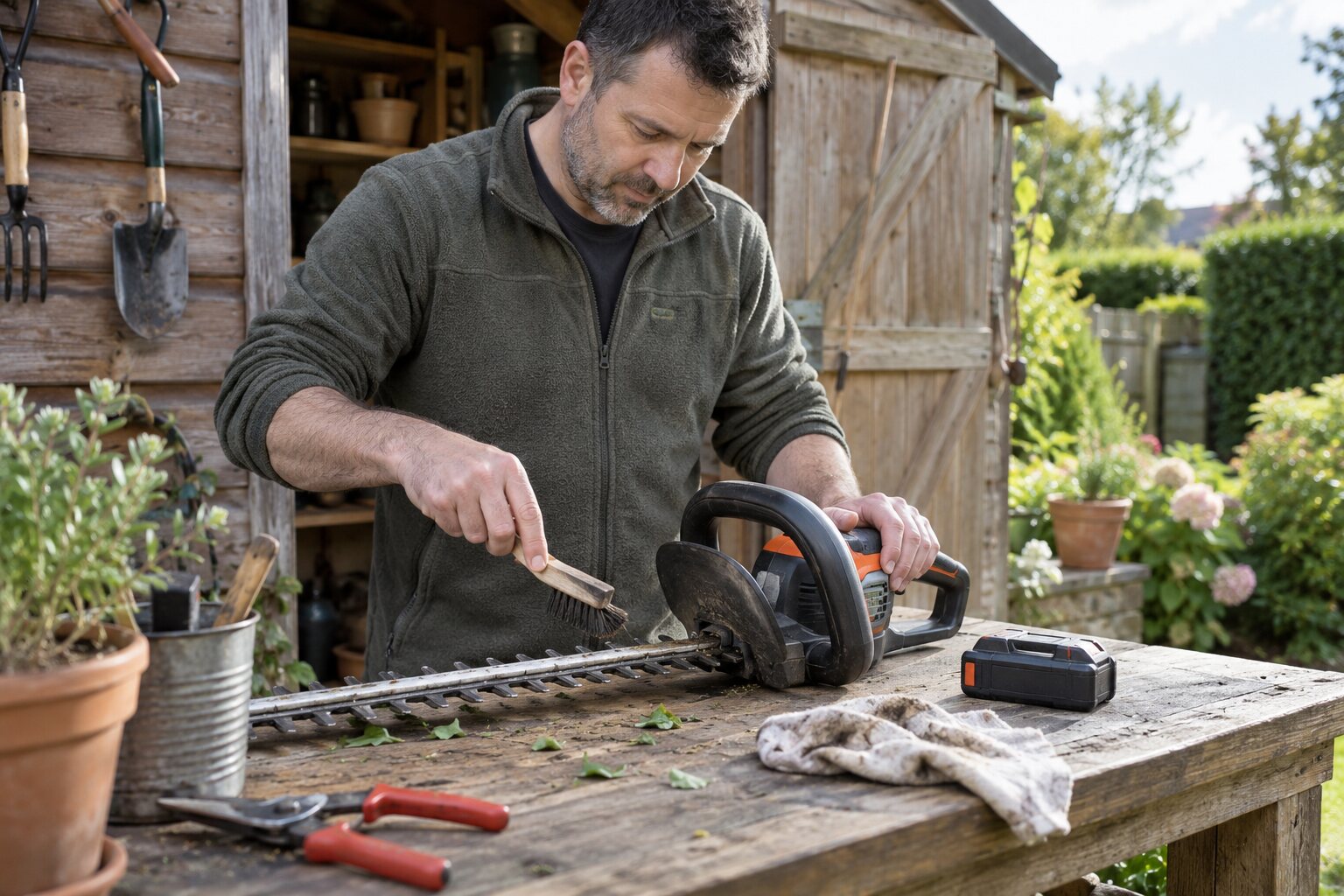
A hedge trimmer lasts longer when plant sap, dust, and moisture are removed before storage. The first rule is to make the tool impossible to start while you are cleaning it: unplug a corded model, remove the battery from a cordless model, or follow the fuel and spark-plug procedure for a gas unit.
Clear debris from the cutting area
Wear gloves and eye protection, then brush away leaves and twigs with a stiff nylon brush. Never pull debris through the teeth with bare fingers. Check that the trigger, guard, and blade lock are not obstructed, and stop if the blade is bent, cracked, or missing a fastener.
Remove sap without flooding the tool
Use a manufacturer-approved cleaner or a small amount of suitable solvent on a cloth. Keep liquid away from switches, vents, battery contacts, and the motor housing. Wipe the blade dry afterward, then apply the specified light lubricant so the teeth do not seize or corrode.
Inspect before putting it away
Check the cord or battery housing, strain relief, guard, screws, and blade alignment. Recharge and store batteries according to the manufacturer’s temperature and charging guidance, not in a hot shed or damp corner. Fuel-powered models need fresh fuel practices and the storage steps listed in their manual.
Use a protected storage position
Fit the blade sheath before carrying or shelving the trimmer. Hang it securely or place it where the cutting bar cannot contact tools, children, pets, or walkways. Keep the manual and a small maintenance record with the tool so the next inspection is not skipped.
If the motor smells burnt, the blade binds, a safety switch fails, or the tool vibrates unusually, do not return it to service. Have it repaired before the next trimming session.