
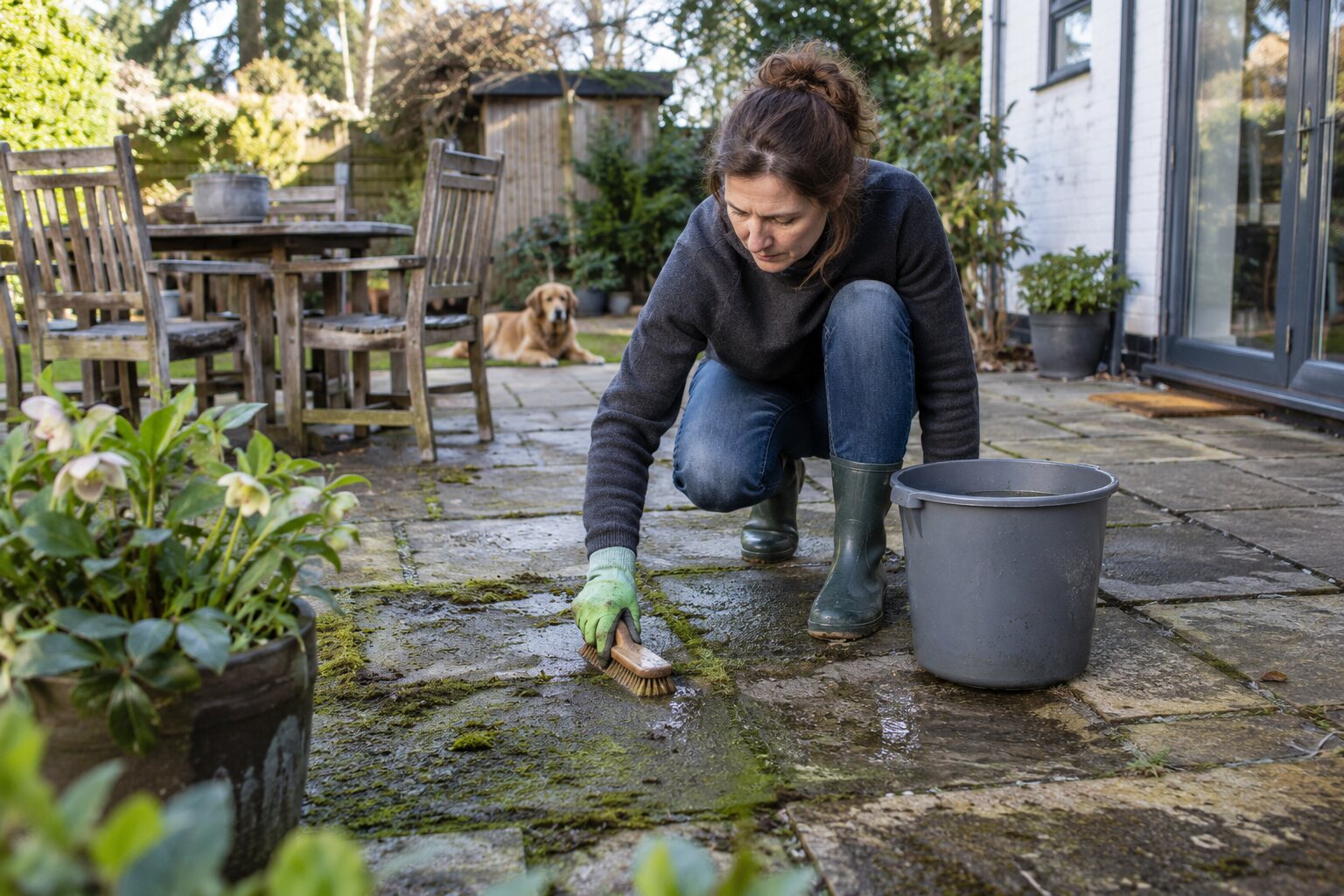
Moss thrives where patio pavers stay shaded and damp. Removing it is only part of the job; improving drainage, airflow, and sunlight helps keep the surface from becoming slippery again.
Choose a dry working window
Pick a calm day when the pavers can dry afterward. Move furniture, sweep loose leaves, and protect nearby plants from runoff. Wear gloves and shoes with good traction because wet moss can be slick.
Start with mechanical removal
Use a stiff outdoor brush to lift moss from the joints and surface. Work in small sections and collect the loosened material rather than brushing it into soil or drains. A plastic scraper can help with thick growth, but avoid chipping the paver edges.
Use cleaners carefully
If water alone is not enough, select a product labeled for concrete or pavers and follow its dilution and dwell-time instructions. Do not mix bleach, acids, and other cleaners. Test a hidden area first because some products can lighten the surface or damage nearby vegetation.
Rinse and correct the cause
Rinse with controlled water pressure and keep dirty runoff away from ponds and storm drains. Trim back plants that block airflow, clear low spots where water collects, and refresh joints with the correct jointing material after the pavers dry.
Do not seal a damp or actively mossy surface. Regular sweeping and quicker drying are usually more durable than repeated aggressive chemical treatments.