
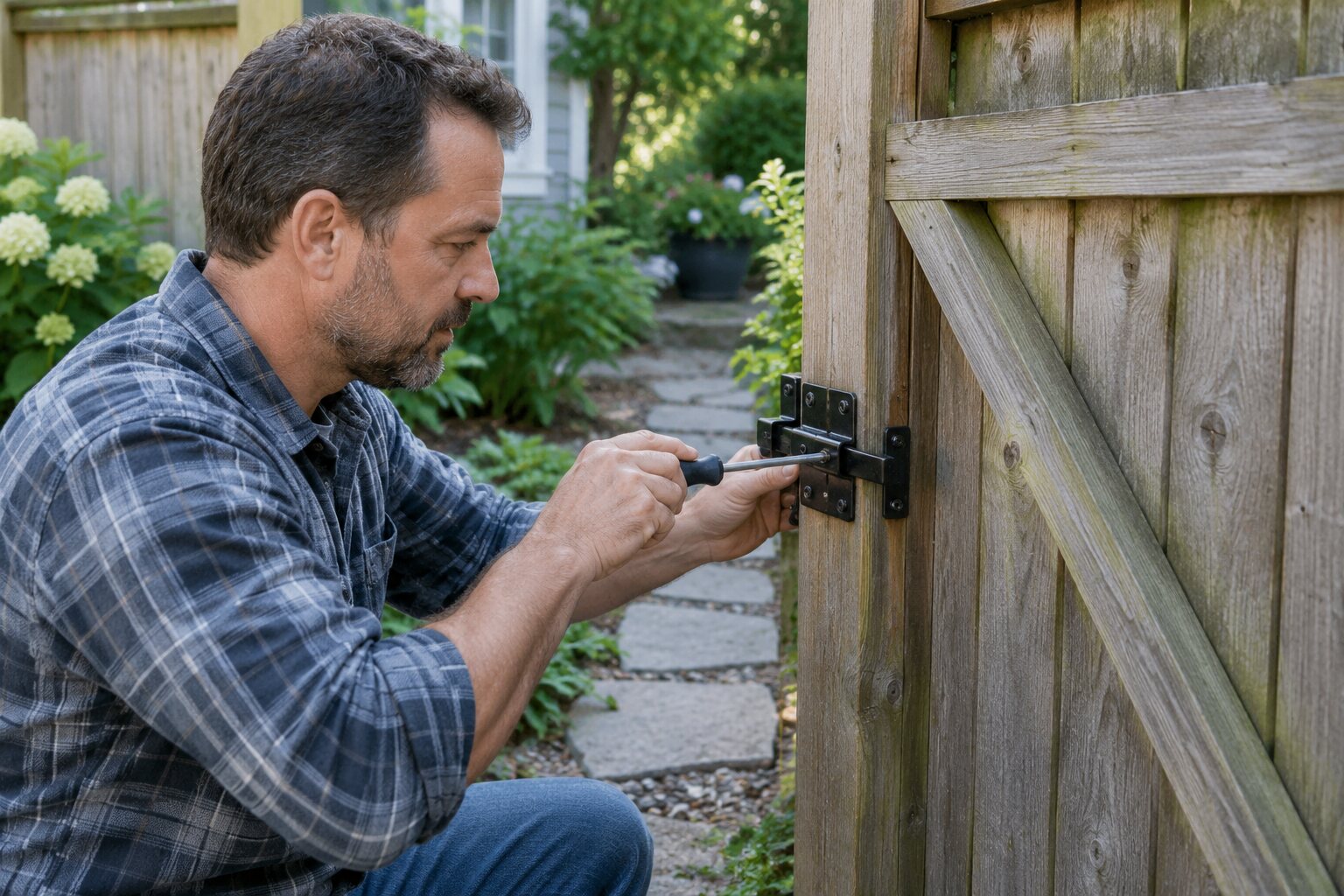
A loose gate latch can leave a yard unsecured or force the gate to slam. Tightening it properly means checking the gate alignment, the latch hardware, and the wood behind the screws rather than simply driving the old screws deeper.
Check alignment first
Close the gate slowly and observe whether the latch tongue meets the receiver cleanly. Look for sagging hinges, a swollen gate, shifted posts, or a strike plate that has moved. A latch cannot work reliably if the gate is no longer square.
Inspect the fastening points
Remove loose screws only after supporting the latch. Check for stripped holes, cracked wood, rusted hardware, and a bent latch arm. Replace indoor screws with exterior-rated fasteners of an appropriate length when the wood is sound.
Repair weak wood
If the screws spin, move the latch to fresh wood when the layout allows or repair the damaged area before reinstalling it. Do not pack random soft material into a hole and expect it to hold a safety-critical gate for long.
Test through the seasons
Tighten the hardware evenly, close the gate several times, and confirm that the latch releases from both sides if designed to do so. Leave enough clearance for seasonal swelling and keep the latch lubricated with a product approved for outdoor hardware.
If the post moves, the gate frame is twisted, or the latch still misses after adjustment, repair the hinges or post before relying on the latch. A stable gate closes quietly and stays secure without force.