
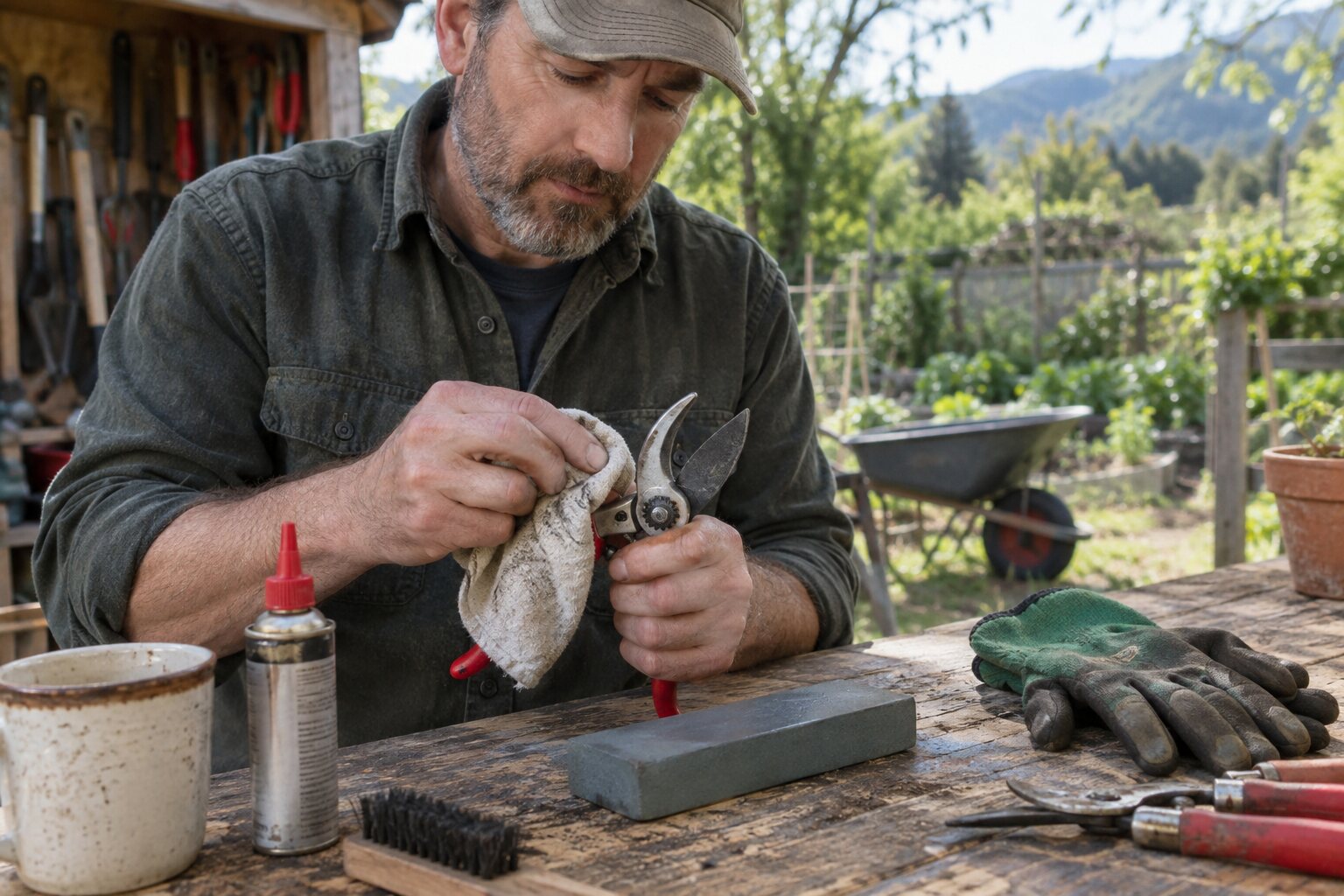
Clean, sharp bypass pruners make a clean cut with less squeezing and less damage to stems. A short maintenance routine after use also prevents sap and plant disease from building up around the pivot and blade.
Disassemble only if designed for it
Wear gloves and close the handles before wiping the tool. If the manufacturer provides a service screw, loosen it carefully and keep the washer and spring together. Do not force a riveted pivot apart. Brush away soil first so grit does not become a grinding paste when oil is added.
Remove sap and residue
Wipe the blades with a cloth dampened with warm soapy water. For stubborn sap, use a small amount of the cleaner recommended for garden tools and keep it off painted grips. Dry every metal surface immediately. If rust is present, use fine abrasive material lightly and stop once the active rust is removed rather than thinning the blade.
Sharpen the bevel
Open the pruners and identify the beveled cutting face. Use a fine pruning-tool file or sharpening stone at the existing angle, drawing it from the pivot toward the tip in smooth strokes. Keep the flat back of the blade nearly flat against the stone and remove only enough metal to restore a continuous edge. Never sharpen the flat side into a new bevel.
Oil and test
Apply one drop of light tool oil to the pivot and work the handles several times. Wipe away excess oil so it does not attract grit. Close the blades and check that they meet cleanly without a side gap. Test on a small disposable twig; a clean slice is better evidence than a sharp-feeling edge touched with a finger.
Disinfect pruners between visibly diseased plants using a product appropriate for garden tools, then dry them before storage. Keep the blades closed in a dry place and schedule a deeper cleaning at the end of the growing season.