
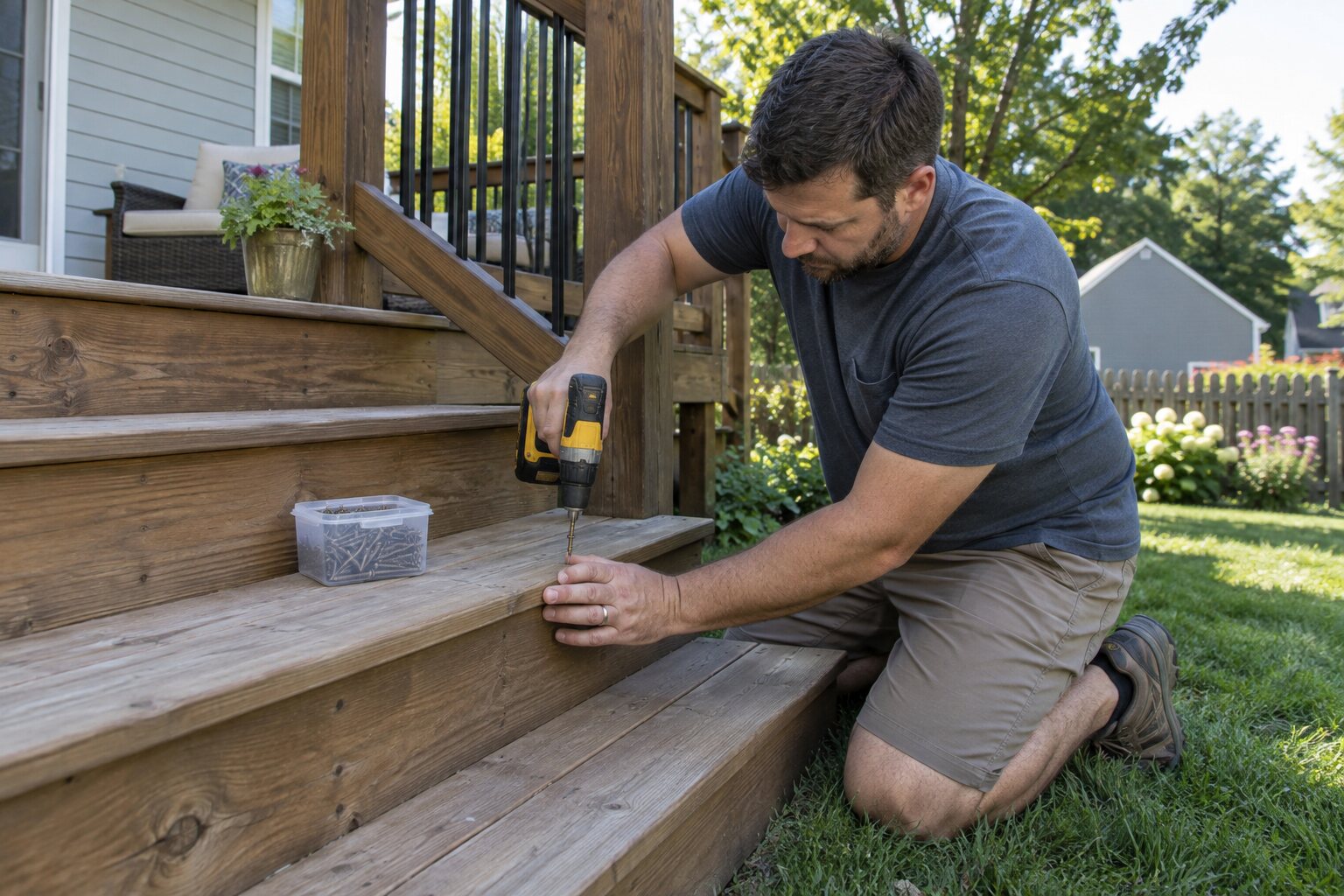
A loose stair tread can flex, squeak, and become a trip hazard. Tightening it safely requires finding the movement, checking the supporting framing, and using exterior-rated fasteners rather than driving a screw into unsupported wood.
Inspect before fastening
Keep the stairs clear and test the tread with your foot while holding the handrail. Look underneath for a split stringer, rotten support, or missing blocking. If the wood is soft, the stair rocks at the stringer, or the handrail is loose, treat it as a structural repair and bring in a qualified deck professional.
Choose suitable fasteners
Use exterior-rated structural or deck screws long enough to pass through the tread and securely enter the framing. Do not use drywall screws. Match the fastener to the wood and finish, and predrill near board ends to reduce splitting.
Pull the tread tight
Have another person stand clear while you align the board with the neighboring treads. Drive two fasteners into each supporting stringer or blocking point, keeping them away from cracks and edges. Countersink only slightly so water does not pool in a deep hole.
Finish and monitor
Fill or seal exposed holes according to the deck finish, then step on the tread again. It should feel firm without a new squeak or visible lift. Recheck after rain and at the start of each season, especially on stairs exposed to repeated wetting.
Fasteners cannot restore rotten framing. When the supporting wood is compromised, replacement of the damaged member is the safer long-term repair.