
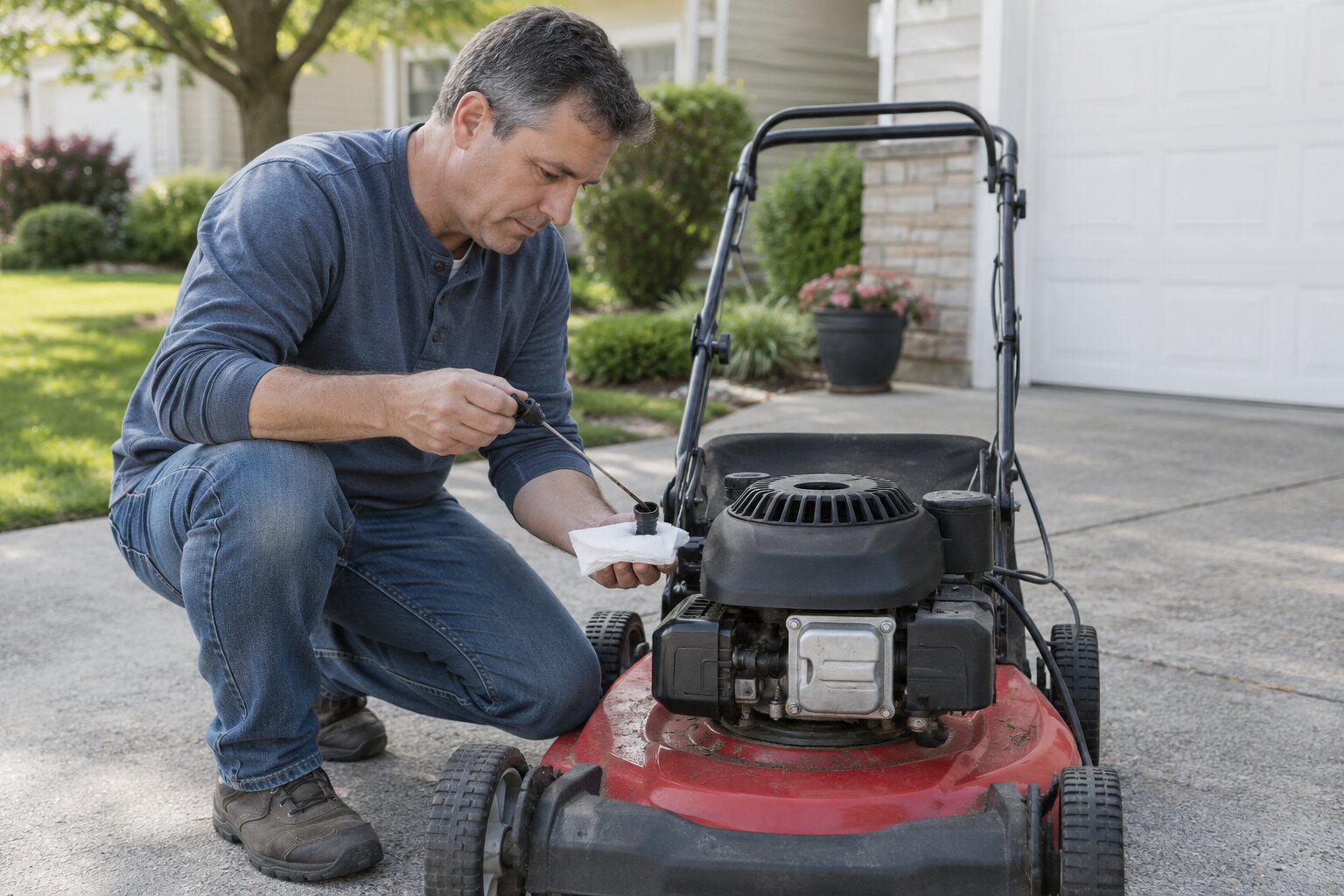
Checking engine oil before mowing protects the engine from overheating and premature wear. The reading is reliable only when the mower is level, stopped, and cool enough to handle safely.
Park and prepare
Move the mower to a flat driveway or firm work area, switch it off, and disconnect the spark-plug wire if you will reach near the blade or underside. Let a recently run engine cool. Keep fuel and oil away from hot surfaces, drains, children, and open flames.
Read the dipstick correctly
Clean around the fill cap before removing it so dirt cannot enter. Pull the dipstick, wipe it clean, reinsert it fully without threading if the manual specifies that method, then remove it again. The oil should sit between the marked low and full lines and appear free of metal flakes or milky contamination.
Add the right amount
Use the oil grade listed in the mower manual and add a small amount at a time through a funnel. Wait briefly, then repeat the dipstick check. Overfilling can be as harmful as running low, so never pour in a full bottle without measuring.
Know when service is needed
If the oil is very dark, smells strongly of fuel, contains debris, or the level falls repeatedly, stop and arrange maintenance. Replace the cap firmly, wipe spills, reconnect the spark-plug wire, and test the mower only after all tools are clear.
Record the date of each oil check and change. A minute before mowing can prevent an expensive engine failure.