
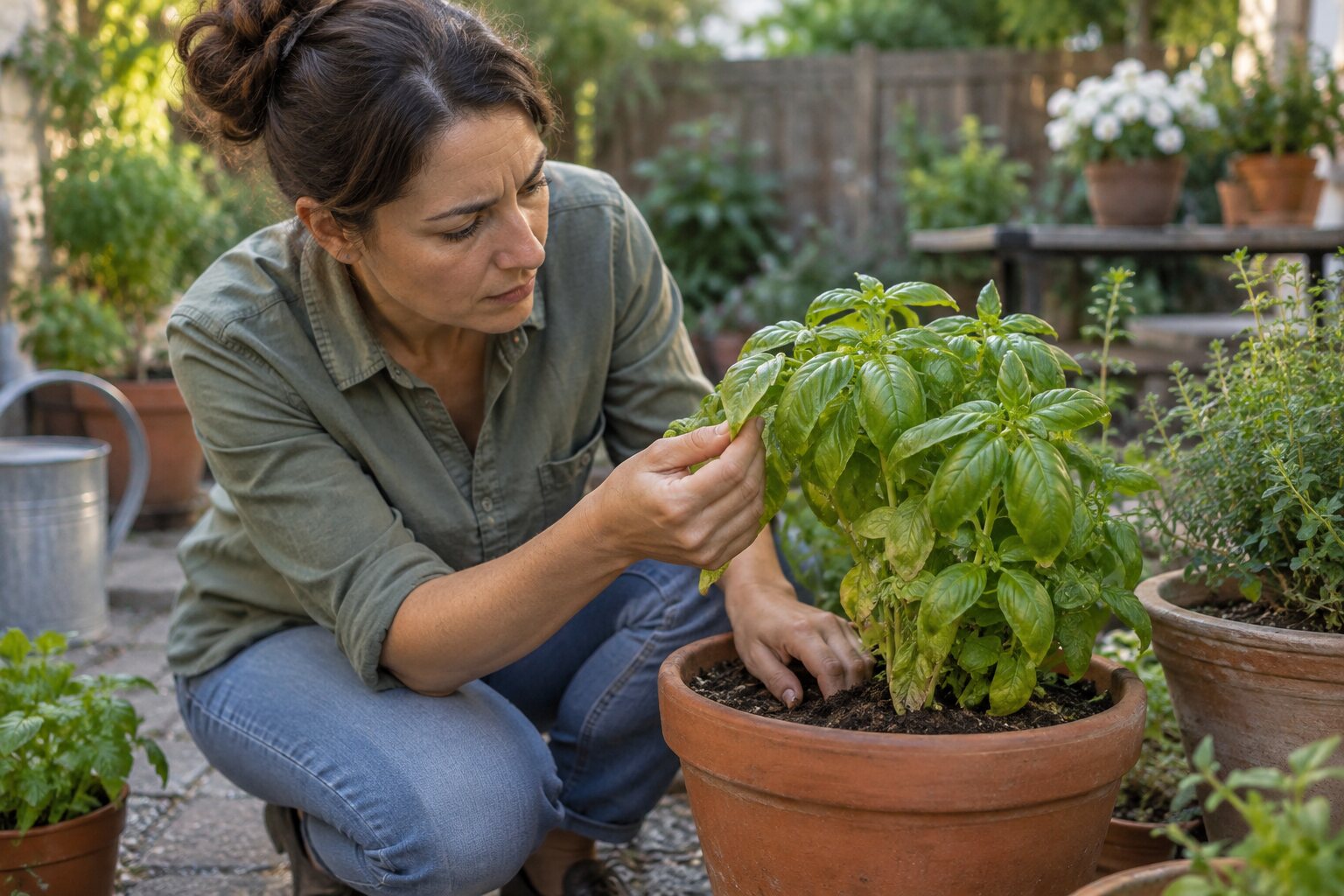
Basil that looks tired is not always thirsty. In a pot, slow-draining soil can leave roots short of oxygen, causing yellowing leaves, soft stems, and a sour-smelling mix even while the surface looks dry. A careful inspection helps distinguish overwatering from heat, pests, or ordinary leaf aging.
Read the whole plant
Check several leaves rather than judging one older leaf. Overwatered basil often has widespread pale lower leaves, limp growth despite damp soil, and stems that feel soft at the base. Brown spots can also come from splash, cold conditions, or disease, so look for a pattern and inspect the undersides for insects before changing the watering schedule.
Check the root zone
Push a finger into the mix several inches or lift the pot to compare its weight with a recently watered pot. Confirm that the drainage hole is open and that the container is not sitting in a saucer of water. If the soil smells sour or remains wet for many days, slide the root ball out gently and look for dark, mushy roots rather than firm pale roots.
Correct the conditions
Let the upper portion of the mix dry before watering again, then water thoroughly until excess drains away. Empty the saucer. Move the plant into bright light with good air movement, but avoid sudden intense afternoon heat while it is stressed. If roots are damaged, trim only clearly rotten sections with clean scissors and repot into a clean container with fresh, well-draining mix.
Prevent a repeat
Water by soil condition and plant weight rather than by a calendar. Use a pot with a drainage hole, avoid decorative cachepots that trap runoff, and give the foliage room to dry. Harvesting regularly also improves airflow through a crowded basil plant. If the base remains soft or the plant declines after the soil is corrected, replace it rather than continually keeping the mix wet.