
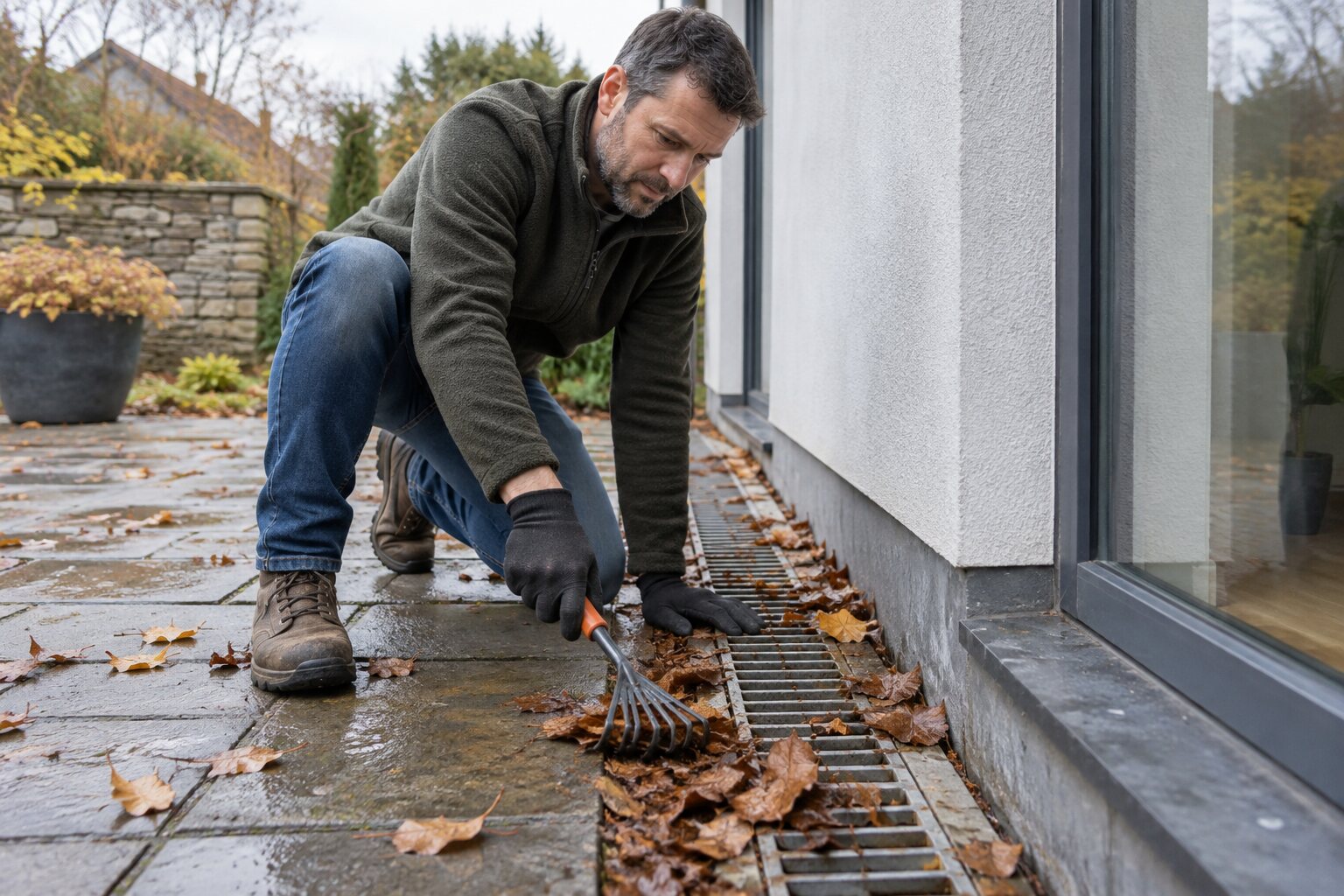
A narrow patio drain channel works only when its grate and outlet remain clear. Removing leaves after storms reduces standing water and shows whether the channel is still carrying water away from doors, walls, and walking surfaces.
Inspect before lifting the grate
Wear gloves with good grip and avoid standing on a wet grate. Check for broken sections, sharp edges, and water that may still be moving underneath. If the drain is near a drop or unstable paving, use a safer access method rather than kneeling on the edge.
Remove surface debris
Lift the grate only as directed by its design and place it where it cannot become a trip hazard. Scoop out leaves and sediment by hand or with a small rake. Do not push the debris farther down the channel where it can block the outlet.
Rinse carefully
Use a modest flow of water to confirm that the channel carries water toward its outlet. Stop if water backs up or rises near the foundation. Avoid pressure-washing debris into a buried pipe unless the system is designed for that service.
Reset and monitor
Replace the grate firmly and sweep the surrounding paving. After the next rain, check for ponding and fresh sediment. Repeated blockage, cracked channel sections, or water backing toward the building calls for drainage maintenance beyond surface clearing.