
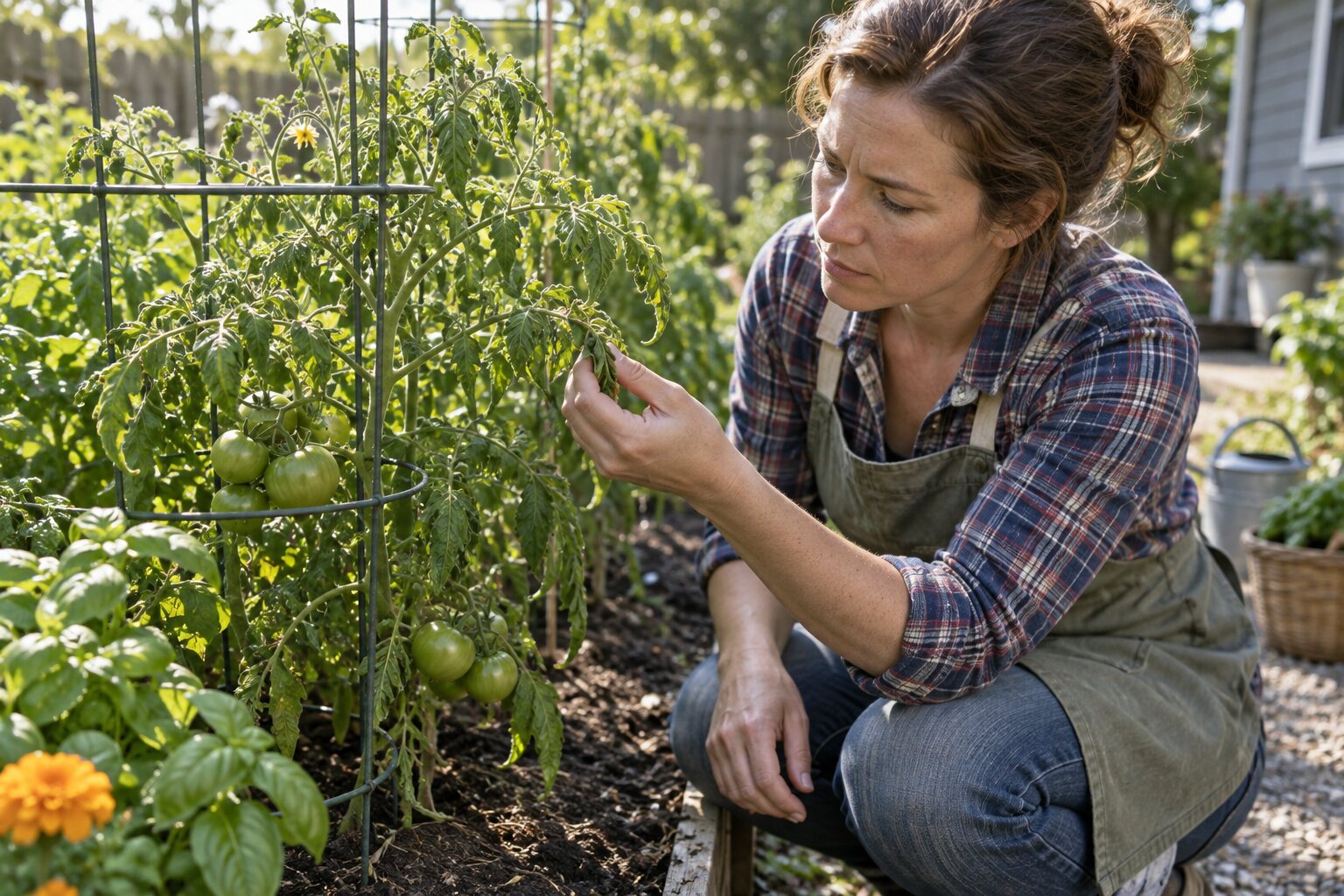
Curled tomato leaves can signal heat, irregular watering, pests, root stress, or a disease problem. Inspecting the whole plant and its growing conditions helps avoid treating a normal response as an emergency or adding more water to an already wet root zone.
Check where the curl begins
Look at old and new leaves, the underside of foliage, and the growing tip. Heat-related curl may affect otherwise green leaves, while pests can leave stippling, sticky residue, or distorted new growth. Note whether stems remain firm and whether flowers are setting normally.
Review water and light
Feel the soil several inches down and check whether the bed drains after watering. Provide consistent moisture at the soil line and protect the plant from sudden swings between very dry and saturated conditions. Do not wet foliage late in the day.
Inspect for pests and disease
Look for mites, aphids, whiteflies, spots, mosaic patterns, or a yellowing pattern that travels through new growth. Remove only clearly damaged leaves and avoid spreading suspected disease between plants with dirty hands or tools.
Monitor before treating
Make one measured change at a time and watch new growth for a week. If the plant wilts despite moist soil, develops severe discoloration, or declines across the bed, remove the affected plant and seek local extension guidance.