
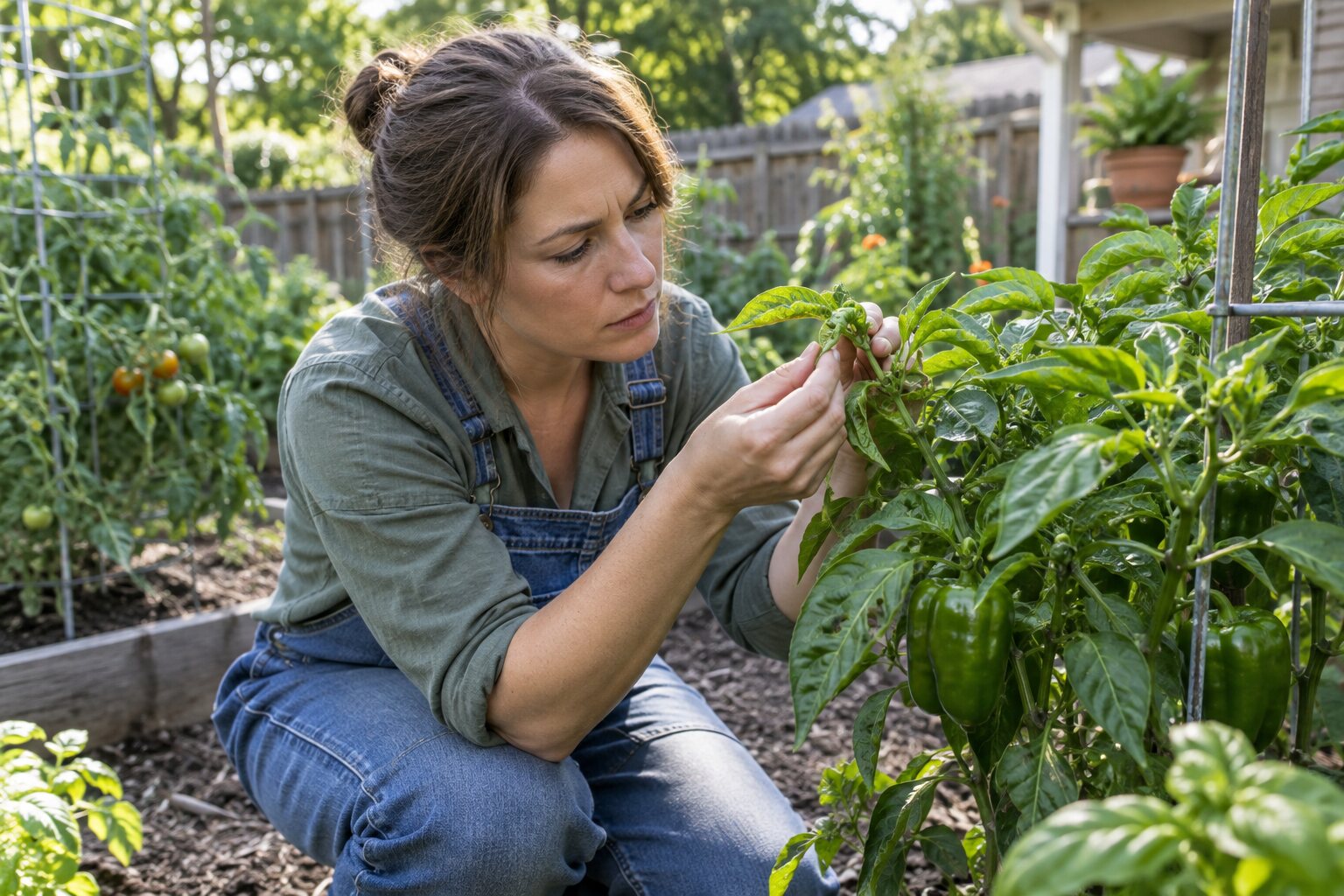
Curled pepper leaves may indicate aphids, but they can also result from heat, herbicide drift, or watering stress. Inspecting the plant closely before spraying protects beneficial insects and helps you choose a treatment that matches the problem.
Look beneath the leaves
Examine tender new growth and the undersides of leaves for small soft-bodied insects, shed skins, and sticky honeydew. Ants moving up the stem can be a clue, although they do not prove an aphid infestation. Use a white card under the foliage to make tiny moving insects easier to see.
Check the pattern
Aphids cluster on new shoots and leaf stems, while heat stress affects larger areas more evenly. Look for curled tips, distorted growth, and sooty mold on sticky surfaces. Photograph the plant before making changes so you can compare new growth later.
Start with gentle control
If the infestation is light, spray the undersides with a firm stream of plain water in the morning and repeat as needed. Encourage lady beetles and lacewings by avoiding broad-spectrum insecticides. Remove badly distorted leaves with clean scissors only when the plant has plenty of healthy foliage.
Use products carefully
If a labeled insecticidal soap or horticultural oil is needed, follow the product label and test a small area first. Do not spray in hot sun or on drought-stressed plants. Keep treatments away from flowers and harvest produce according to the stated interval.
Inspect peppers twice a week during active growth. Early observation usually requires less intervention and preserves more of the garden’s helpful insect community.