
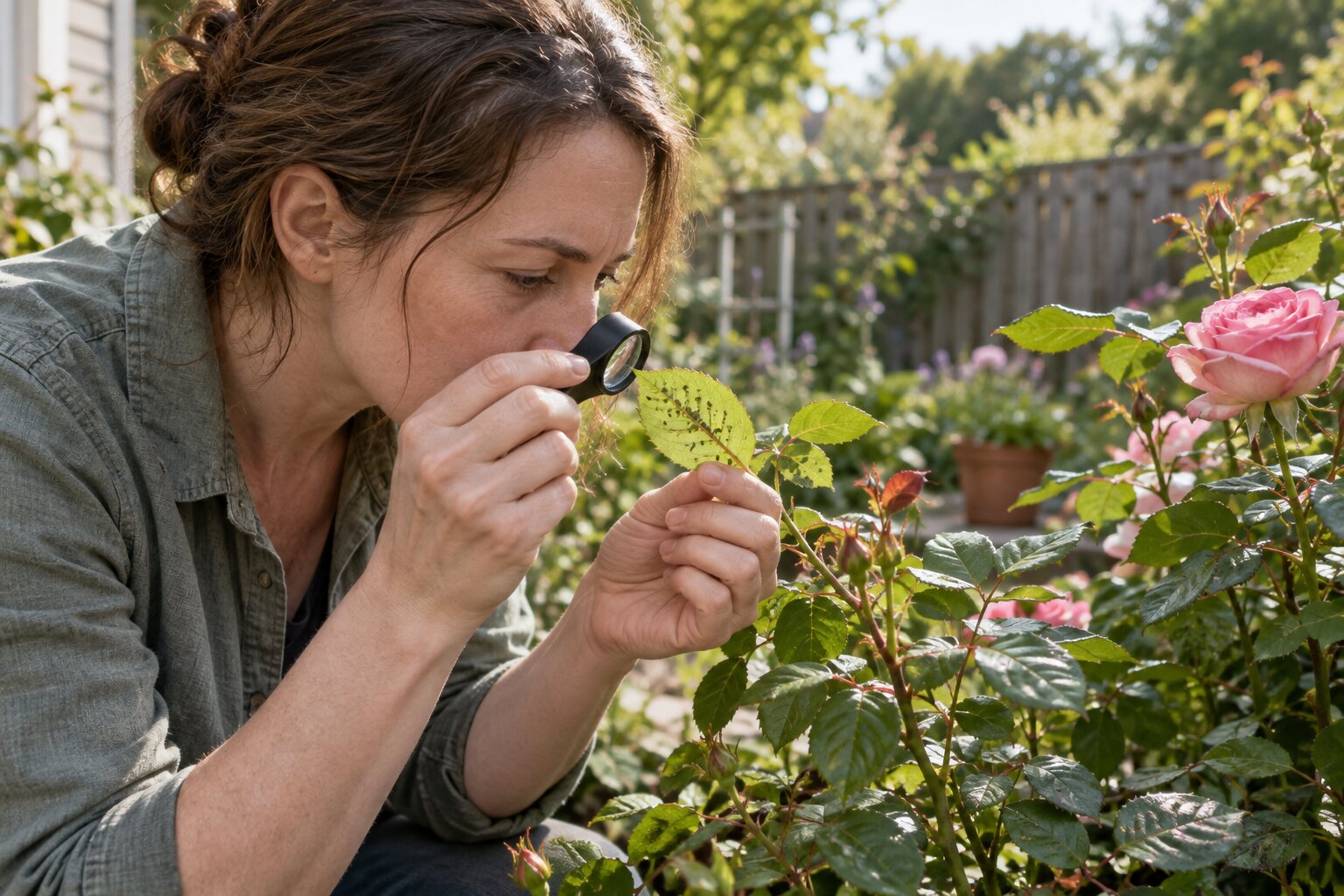
Aphids often appear first on soft new growth, flower buds, or the undersides of leaves. Finding a few does not automatically mean a plant needs a strong pesticide; careful inspection helps distinguish a small colony from a wider problem and protects beneficial insects.
Inspect the places aphids prefer
Look closely at the newest stems, curled leaves, buds, and leaf undersides. Aphids may be green, black, pink, yellow, or nearly translucent. Check for sticky honeydew, ants moving up the stem, distorted growth, and sooty mold on older leaves. Use a hand lens when the insects are tiny.
Check the whole plant
Inspect neighboring roses and plants with fresh growth before treating anything. Count affected shoots and note whether leaves are merely occupied or are twisting and failing to expand. A few aphids can often be controlled by natural predators or a strong but gentle water spray.
Use the least disruptive control
On a cool morning, direct a moderate stream of water at the undersides of affected leaves without stripping flowers or damaging tender stems. Repeat after several days. Encourage lady beetles, lacewings, and hoverflies by avoiding broad-spectrum insecticides when damage is minor.
Escalate carefully
If colonies continue to expand, use a product labeled for roses and aphids, follow the label exactly, and avoid spraying open flowers when pollinators are active. Test any soap or oil product on a small section first because heat, drought stress, and sensitive varieties can increase leaf injury.
Prune only badly damaged shoots with clean tools, dispose of infested material, and keep the rose watered at its root zone. Ongoing aphids may indicate lush nitrogen-fed growth, crowded foliage, or ant protection that needs to be addressed as part of the solution.