
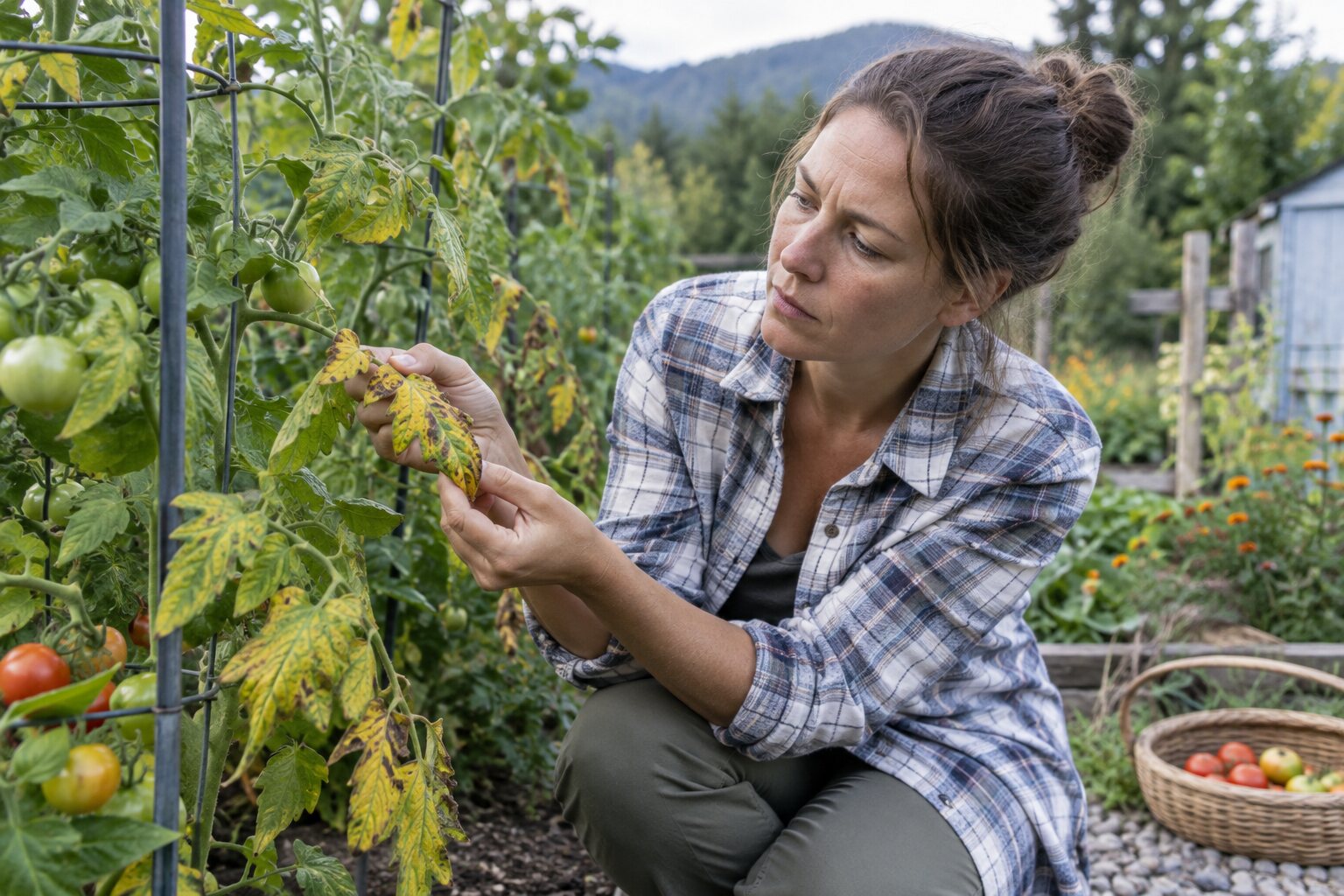
Yellowing tomato leaves can result from age, watering stress, nutrient imbalance, insects, or disease. The pattern, location, and speed of change matter more than the color alone, so inspect the plant before removing leaves or applying a treatment.
Look at the pattern
Start with older lower leaves and then compare the newest growth. Note whether yellowing appears between veins, along the edges, in round spots, or as irregular patches with dark centers. Check the underside for fungal growth, tiny insects, and water-soaked areas.
Inspect the stem and soil
Look for lesions, cracks, wilting on one side, and a darkened stem near the soil line. Feel the soil several inches down rather than watering by the surface appearance. Poor drainage and long periods of wet foliage can create conditions that favor disease.
Remove only clearly affected material
Prune badly spotted leaves with clean snips and place them in household waste if disease is suspected. Do not compost diseased foliage unless the compost system reliably reaches the required temperatures. Disinfect tools between plants when symptoms are spreading.
Improve the growing conditions
Water at the soil line in the morning, space plants for airflow, mulch without touching the stem, and support vines so leaves stay off the ground. Avoid routine high-nitrogen feeding, which can produce soft leafy growth that is more vulnerable to stress.
If several plants decline quickly, fruit develops dark lesions, or the stem wilts despite moist soil, contact a local extension service or garden professional with clear photographs and notes about weather, watering, and fertilizer.