
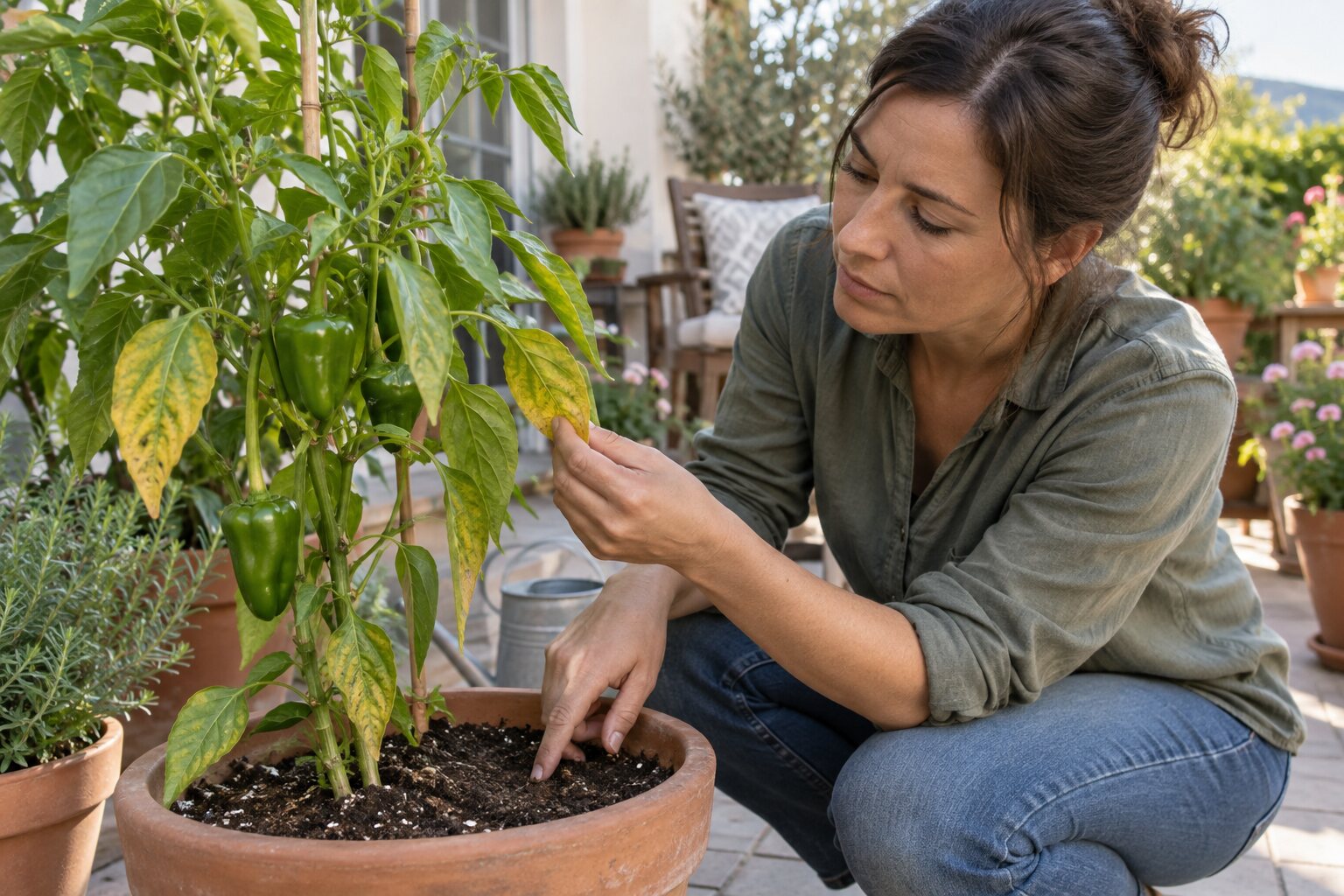
Yellow leaves on a potted pepper plant can come from old foliage, excess water, low light, or a nutrient problem. Looking at the pattern, soil condition, and new growth together is more useful than adding fertilizer immediately.
Read the pattern
One yellow lower leaf may be normal aging, while many pale leaves or yellowing between green veins points to stress. Check for curled leaves, soft stems, pests, and spots. Compare the newest leaves with the older ones before changing more than one condition.
Check the pot and soil
Push a finger into the mix and lift the pot to judge moisture. Confirm that the container has an open drainage hole and is not sitting in water. A consistently wet mix can starve roots of air; a bone-dry, tightly packed mix can also prevent roots from taking up water.
Adjust gradually
Move the plant into bright light while avoiding a sudden heat shock. Water thoroughly only when the upper mix has begun to dry, then empty the saucer. Remove badly damaged leaves with clean scissors and wait to see new growth before applying a labeled fertilizer.
Monitor the recovery
Keep notes on watering and leaf changes for a week. If yellowing spreads despite balanced moisture and light, inspect roots and the undersides of leaves. Persistent decline, foul soil odor, or a soft crown may mean the plant is better replaced than repeatedly stressed.