
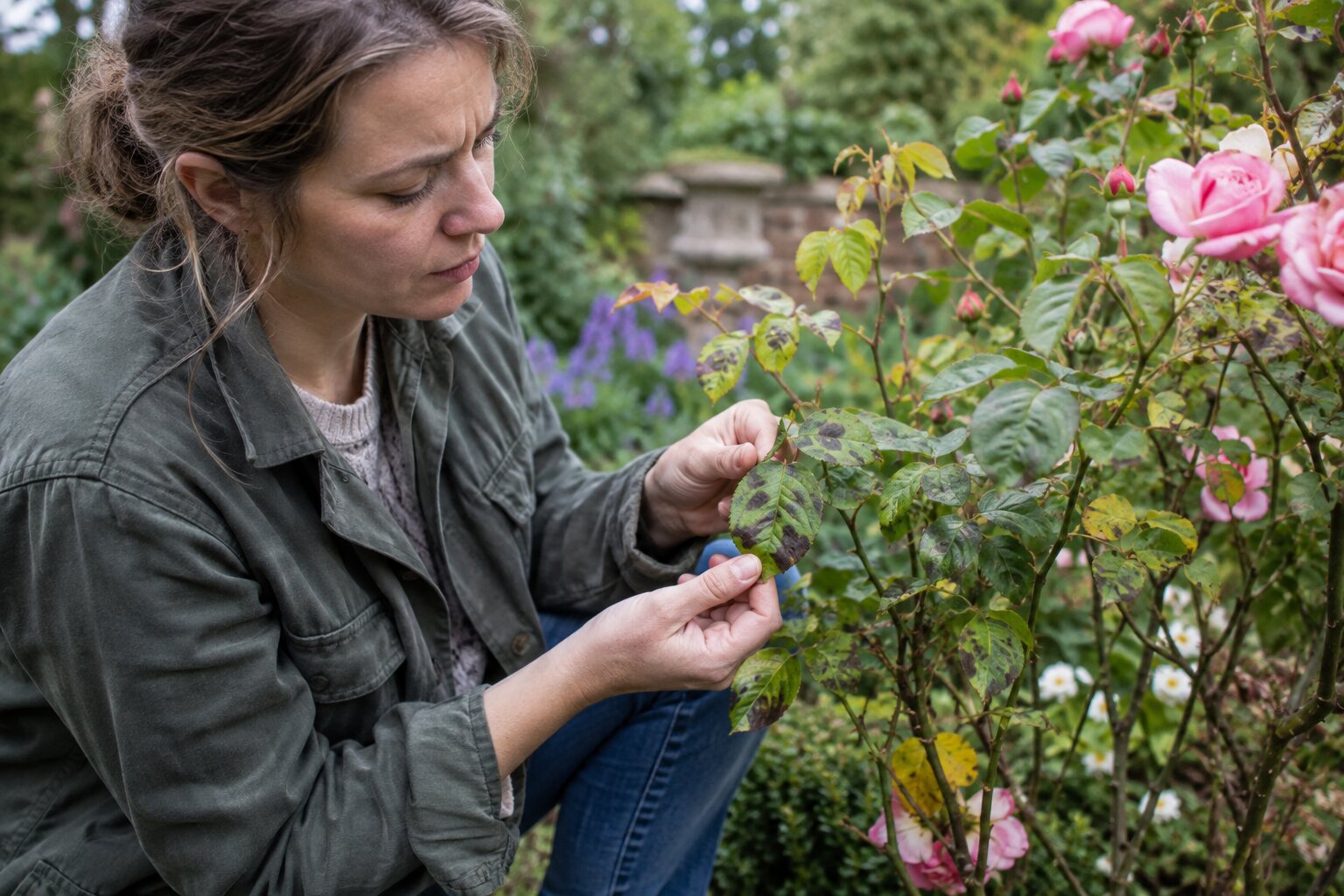
Black spot is a common rose disease that produces dark circular lesions followed by yellowing and leaf drop. Early inspection helps limit spread, but treatment works best when combined with dry foliage, airflow, and sanitation.
Study the spots and leaf position
Look for dark spots with irregular fringed edges, often beginning on lower leaves. Compare affected leaves with new growth and check whether spots appear after rainy periods. Other problems can cause yellowing, so note the shape and progression before treating.
Remove sources of infection
Pick up fallen leaves and place them in household waste rather than compost if disease is suspected. Prune crowded interior growth with clean tools to improve airflow, and avoid working with wet foliage because handling can spread spores.
Change watering habits
Water at the soil line in the morning and keep mulch from touching the stems. Space roses so air can move through the canopy. Avoid overhead irrigation and choose a sunny position for future plantings when possible.
Use products carefully
If disease continues, select a fungicide labeled for roses and black spot in your area. Follow the label, protective-equipment instructions, reapplication interval, and pollinator precautions. Test sensitive varieties before treating the entire plant.
Remove only heavily affected leaves so the rose retains enough healthy foliage. If the plant declines rapidly or the diagnosis is uncertain, seek local extension advice rather than applying several products at once.