
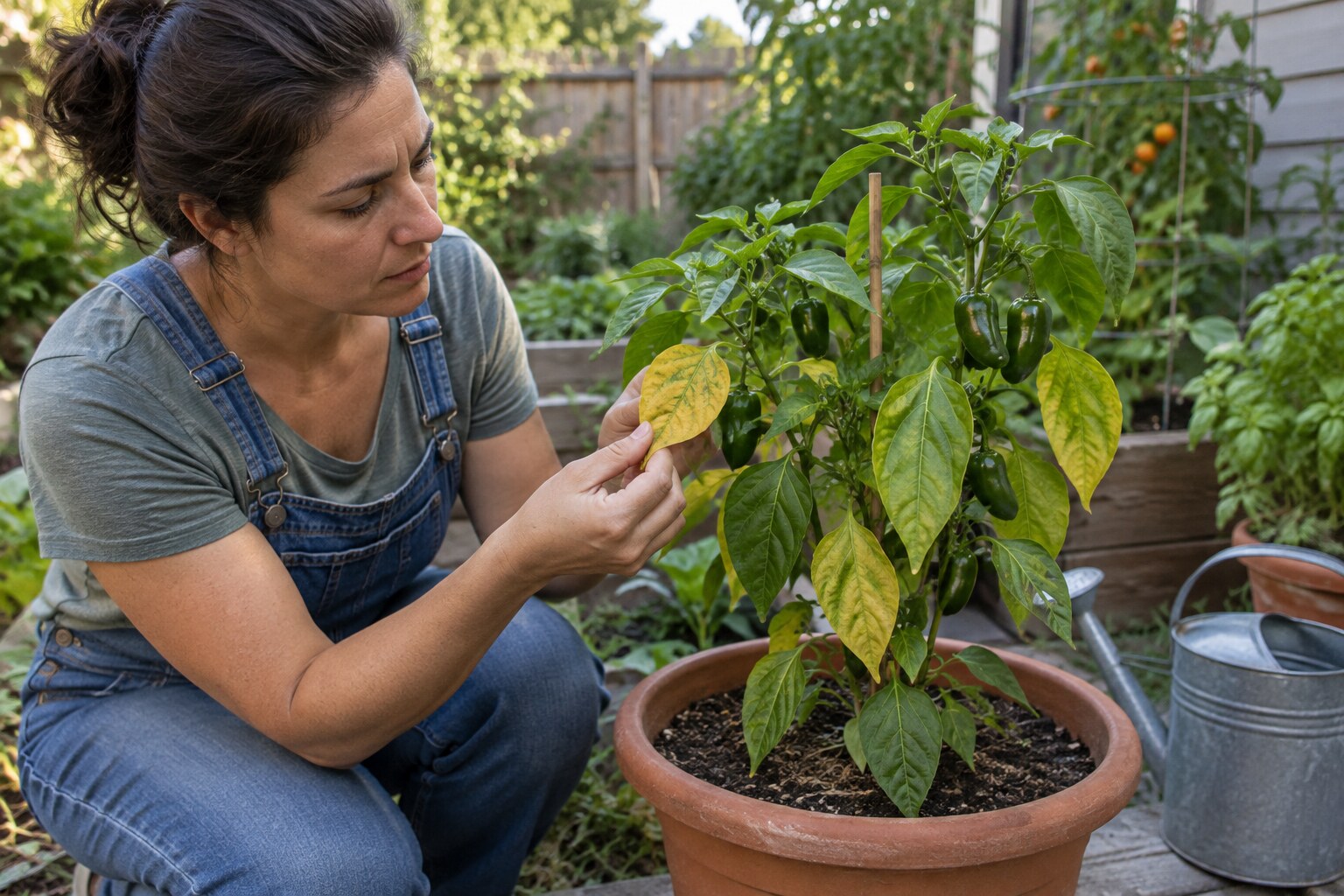
Yellow pepper leaves can result from normal aging, uneven moisture, poor drainage, root stress, pests, or a nutrient imbalance. Inspecting the pattern and the growing conditions helps distinguish a correctable care issue from a problem that needs local diagnosis.
Study the pattern
Note whether yellowing affects older leaves, new growth, or the entire plant. Check leaf undersides for pests and look for spots, curling, sticky residue, or a pale pattern between veins. Photograph changes so you can compare new growth over time.
Review the root zone
Feel the soil below the surface and confirm that the container or bed drains freely. Water deeply when the soil begins to dry rather than alternating between saturation and severe dryness. Keep foliage dry overnight.
Avoid guesswork
Do not add repeated fertilizer doses simply because leaves look pale. Check the product label, soil history, light exposure, and irrigation pattern first. Excess fertilizer can damage roots and make the symptoms worse.
Monitor new growth
Make one measured change and watch the newest leaves for a week or two. Remove only leaves that are dead or heavily damaged. If stems collapse, spots spread rapidly, or several plants decline together, seek local extension guidance.