
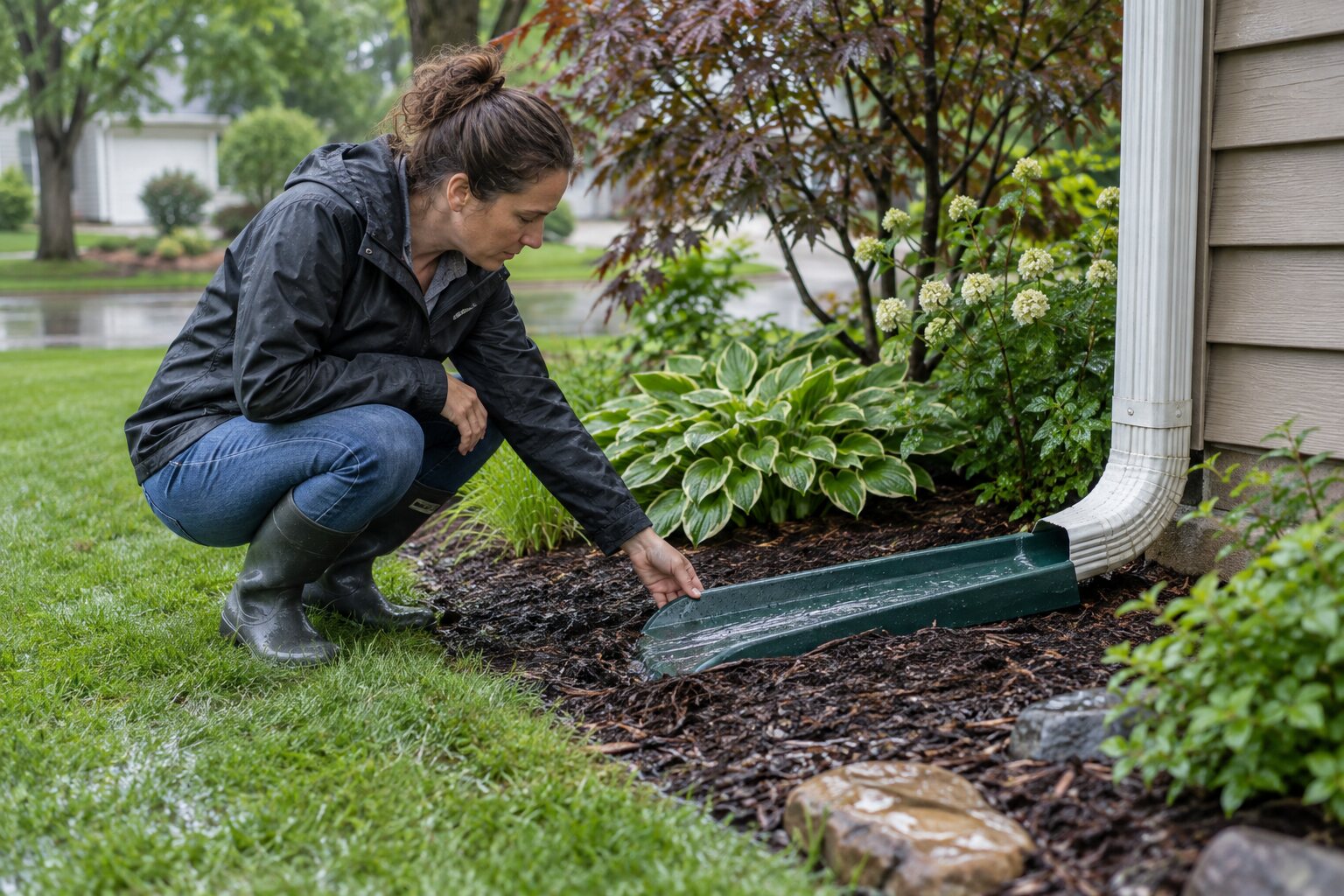
A downspout extension should move roof water far enough from the foundation without creating erosion or a new trip hazard. Inspecting it after rain reveals where water actually travels, not just where the outlet appears to point.
Watch the flow
During or soon after rain, observe the outlet and the soil around it. Look for pooling against the house, channels cut into mulch, or water crossing a walkway. Keep clear of slick ground and do not reach under a moving discharge.
Create a stable slope
Position the extension so it slopes gently away from the foundation and remains supported along its length. Use a splash block or approved underground outlet where appropriate. Do not discharge directly onto a neighboring property, public path, or a place where water can freeze into a hazard.
Protect the outlet
Keep mulch, leaves, and soil out of the opening. If the extension separates during storms, secure it with a compatible connector or buried section rather than placing a heavy object on flexible plastic. Check that mowing equipment can pass without catching it.
Recheck the foundation edge
After the next heavy rain, inspect the basement or crawl-space side of the wall for dampness and look for settled soil near the foundation. Correct low spots and clean the gutter if the flow is unusually strong or uneven.
Good drainage is a system: clear gutters, connected downspouts, stable outlets, and soil graded away from the house all work together.