
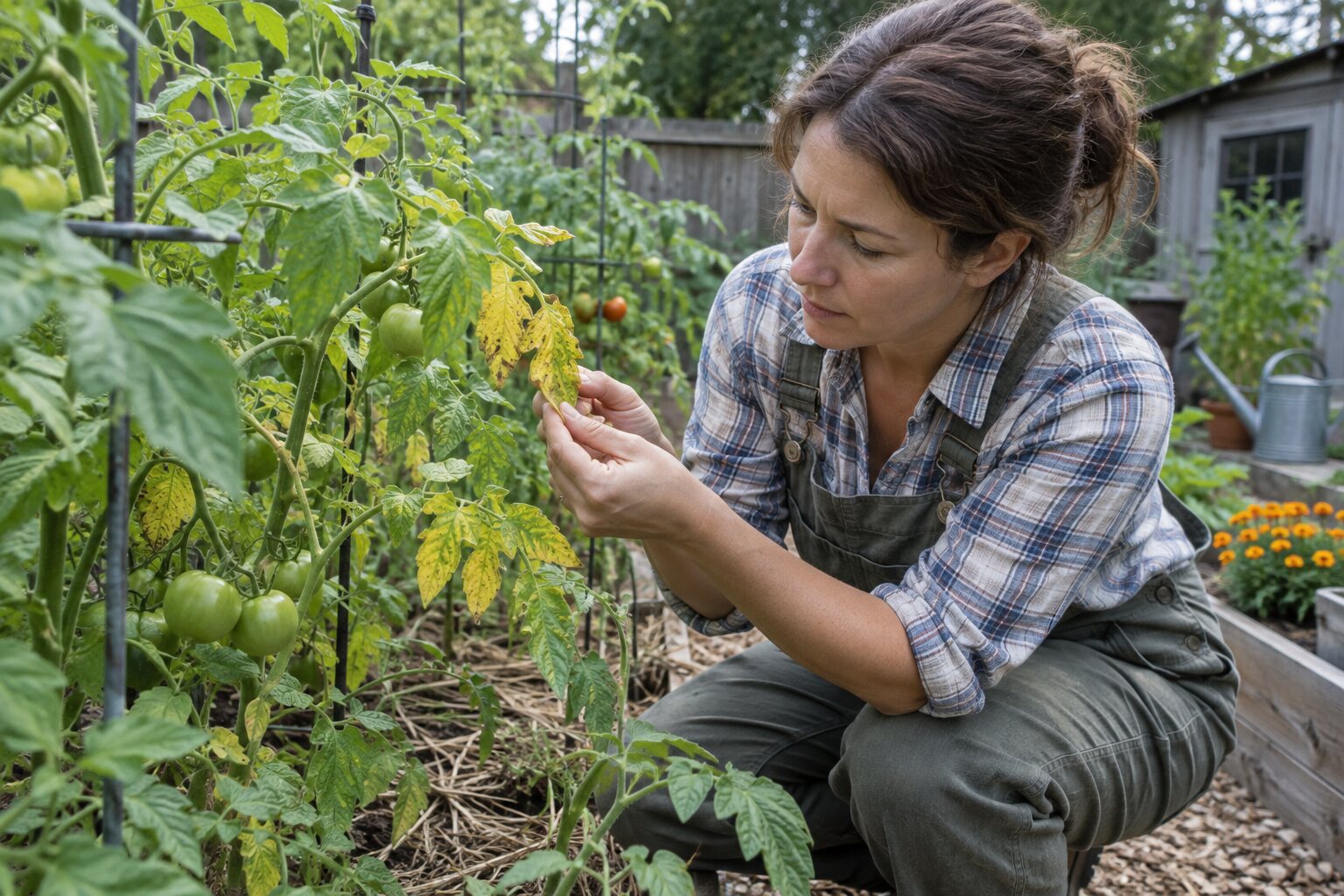
Yellow tomato leaves can result from age, watering stress, nutrient imbalance, disease, or insect feeding. Treating the first yellow leaf with fertilizer or spray often makes the problem harder to diagnose, so begin with the pattern and the plant’s growing conditions.
Check which leaves are affected
Lower leaves that yellow slowly while the plant grows normally may simply be older foliage. Yellowing between veins, damage on new growth, or a pattern that spreads quickly deserves closer inspection. Turn leaves over and look for stippling, insects, eggs, or sticky residue.
Review water and roots
Push a finger several inches into the soil and compare the moisture below the surface with the soil around the plant. Constantly wet soil can restrict roots, while repeated drying can cause stress and nutrient uptake problems. Check that containers drain freely and that mulch is not piled against the stem.
Look for disease signs
Brown spots with halos, concentric rings, gray fuzz, or rapid collapse may indicate a disease rather than a simple nutrient issue. Remove heavily affected leaves with clean pruners and keep them out of compost until the cause is understood. Avoid wetting foliage late in the day.
Change one condition at a time
Do not apply several products at once. Correct watering, improve airflow, and use a soil test before adding fertilizer. Record the date and take a photograph so you can tell whether new growth improves over the next week.
Diagnosis is more useful than a quick cosmetic fix. A plant with healthy new leaves and stable moisture may recover even when older leaves remain yellow.