
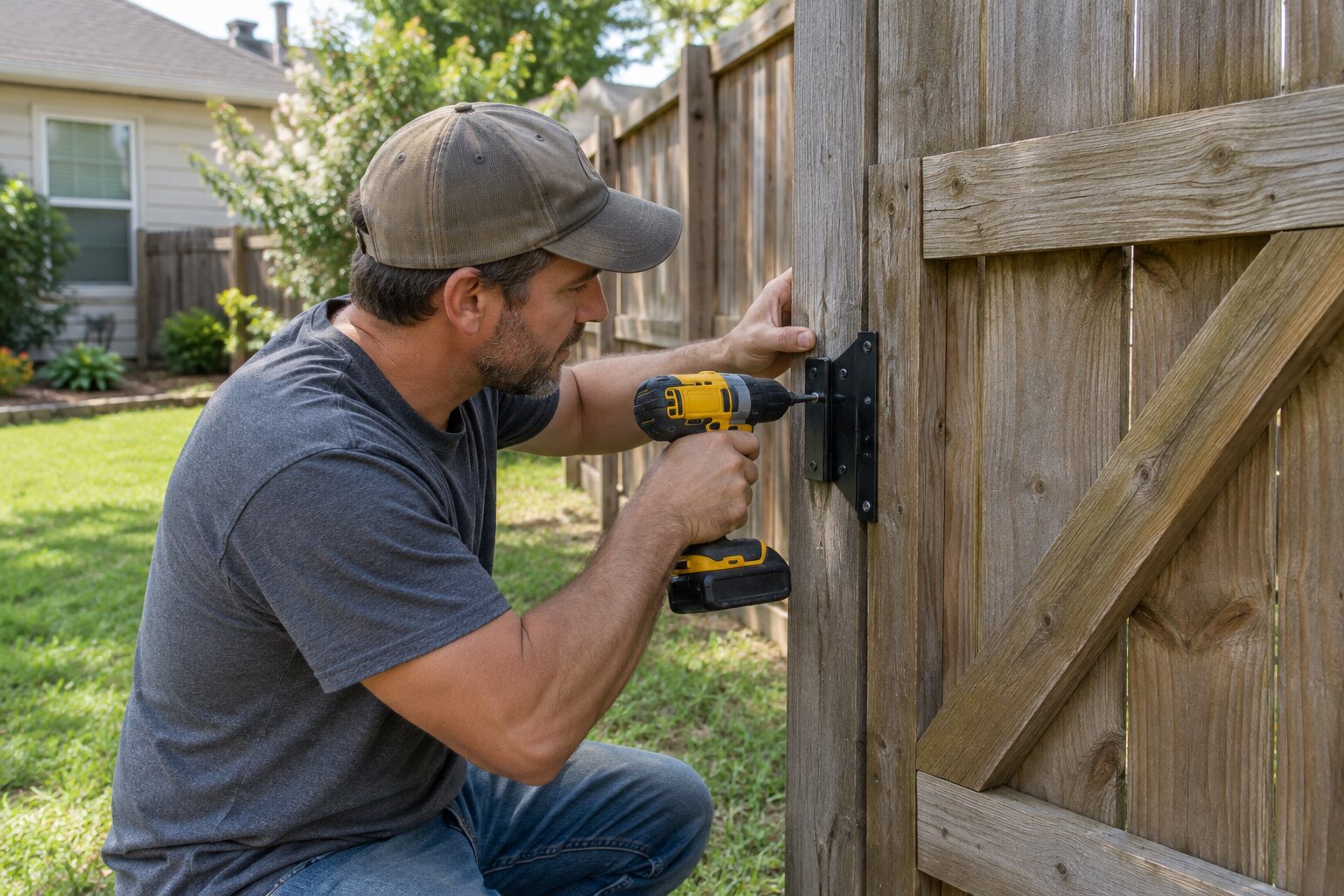
A loose gate hinge is usually a symptom of movement, not just a missing screw. The gate may have sagged, the post may have softened, or the fastener may have been driven only into thin cladding. Correct the support before tightening hardware.
Support the gate before removing hardware
Close the gate and place a solid wedge or temporary support under the latch side. A helper can hold the gate, but a support keeps its weight from shifting when a hinge is loosened. Check the hinge leaves, screws, post, and surrounding rails for cracks or rot.
Find the real failure
If the screws spin, the wood fibers may be stripped. If the post moves, tightening the hinge will not last. If the hinge is bent or the pin is worn, replace it with hardware sized for the gate’s weight and exposure. Mark the original hinge position before making changes.
Rebuild the fastening point
For sound wood, use exterior-rated structural screws with the correct pilot hole and length. For a stripped area, shift the hinge to fresh wood when the layout permits, or repair the post with a proper wood-repair method before reinstalling the hardware. Do not substitute drywall screws or short indoor fasteners.
Align and test in stages
Keep the hinge leaves flat, tighten the screws evenly, and remove the support only after the hardware is snug. Open and close the gate slowly, checking the gap at the latch side and the clearance at the ground. Adjust one hinge at a time rather than forcing the gate into alignment.
Seal exposed end grain and inspect the repair after rain and seasonal movement. If the post is rotten below grade, the gate frame is twisted, or the hinge side continues to move, replacing or reinforcing the post is safer than repeating a surface repair.