
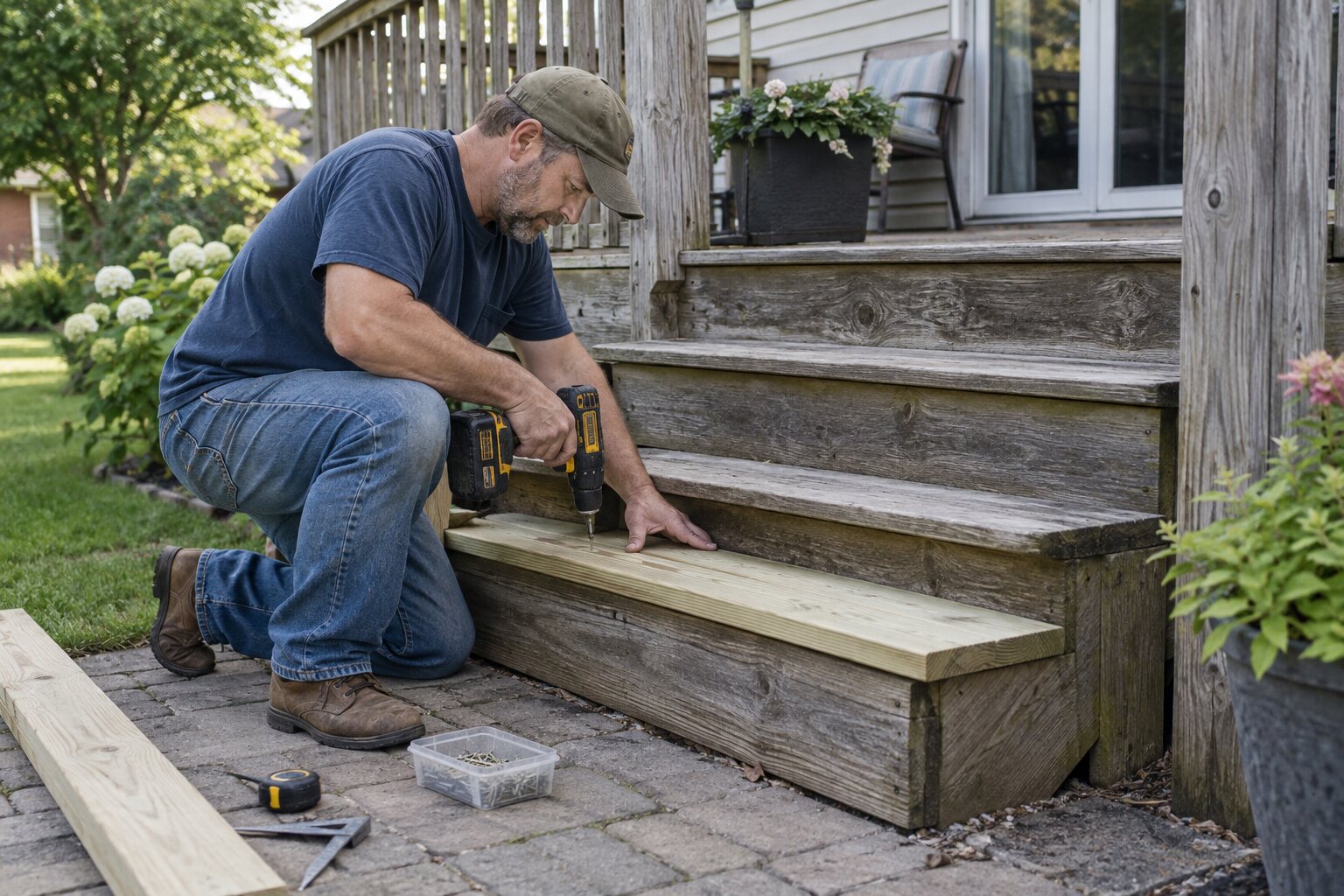
A cracked stair tread is a fall hazard because people load the center and front edge repeatedly. Replacement is more reliable when the supporting stringers, riser, and fasteners are checked at the same time instead of simply covering the crack with a new board.
Close the stairs before starting
Block the stairway and tell household members not to use it. Inspect the tread, stringers, side supports, and railing for rot or movement. If the stringers are soft or the stairs move as a unit, stop and arrange a structural repair rather than replacing one board.
Measure and remove carefully
Measure the old tread’s width, thickness, overhang, and length. Use exterior-rated lumber of the same or better strength and choose a species compatible with the existing deck. Remove fasteners with care and protect the neighboring boards from splitting.
Prepare the replacement
Cut the new tread square, seal exposed end grain, and predrill near the ends to reduce splitting. Dry-fit it so the overhang and gaps match the other steps. Do not create a trip edge or close the drainage gap between boards.
Fasten and test
Use exterior structural screws sized for the board and support thickness. Drive them flush without countersinking deeply into the surface. Check the tread with a level, then test it with gradual body weight only after the fasteners are tight and the supports are sound.
Keep the stairs closed for any finish to cure. Reinspect the tread, railing, and stringers after wet weather because a new board cannot compensate for a deteriorating stair structure.