
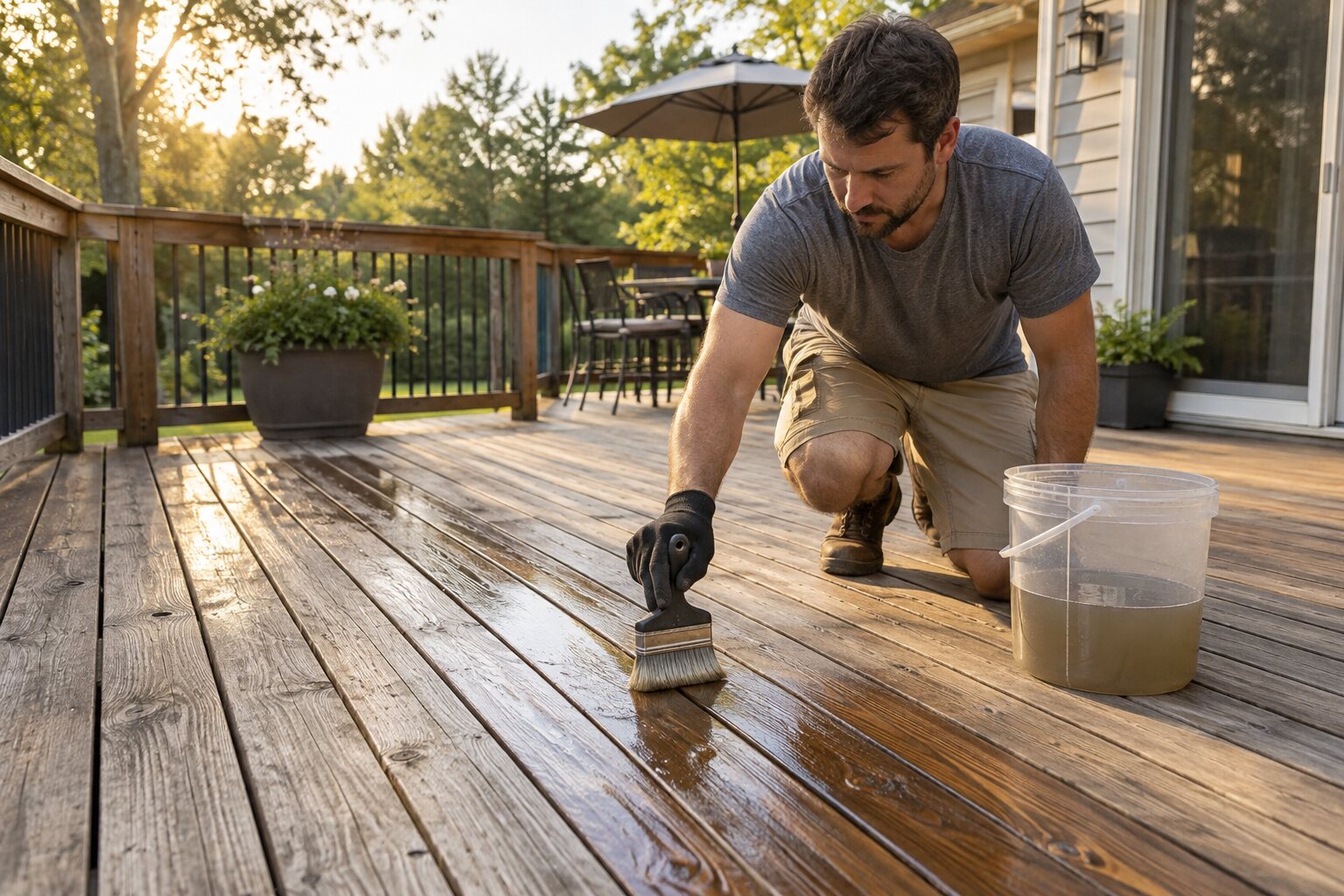
Resealing a weathered deck is a preparation project before it is a coating project. The boards must be sound, clean, and dry, and the finish must be chosen for the wood’s condition rather than for color alone.
Evaluate the boards first
Walk the deck and look for soft spots, raised fasteners, cracked ends, loose rails, and boards that flex more than their neighbors. Probe questionable areas with a screwdriver. Replace structurally damaged boards and reset protruding screws before washing or sealing.
Clean without damaging the grain
Sweep thoroughly, then use a deck cleaner appropriate for the wood and existing finish. A low-pressure wash or garden-hose rinse is safer than a concentrated pressure-washer tip held close to the surface. Work in manageable sections and protect nearby plants from runoff.
Let the wood dry fully
Allow several dry days with good airflow, depending on weather and board thickness. A surface can feel dry while moisture remains inside the wood. Follow the product’s moisture guidance, and avoid sealing when rain, heavy dew, or extreme heat is expected during the curing window.
Apply a thin, even coat
Brush or roll with the grain, keeping a wet edge and working around gaps without creating puddles. Do not coat trapped debris, wet end grain, or standing water. Pay attention to board ends and exposed cut edges, where water enters most easily, while keeping the walking surface from becoming glossy and slippery.
Keep people and pets off the deck for the full label cure time. Store oily rags safely because some finishes can cause spontaneous heating when rags are bunched together. Inspect the finish each season and reseal when water stops beading rather than waiting for widespread splintering.