
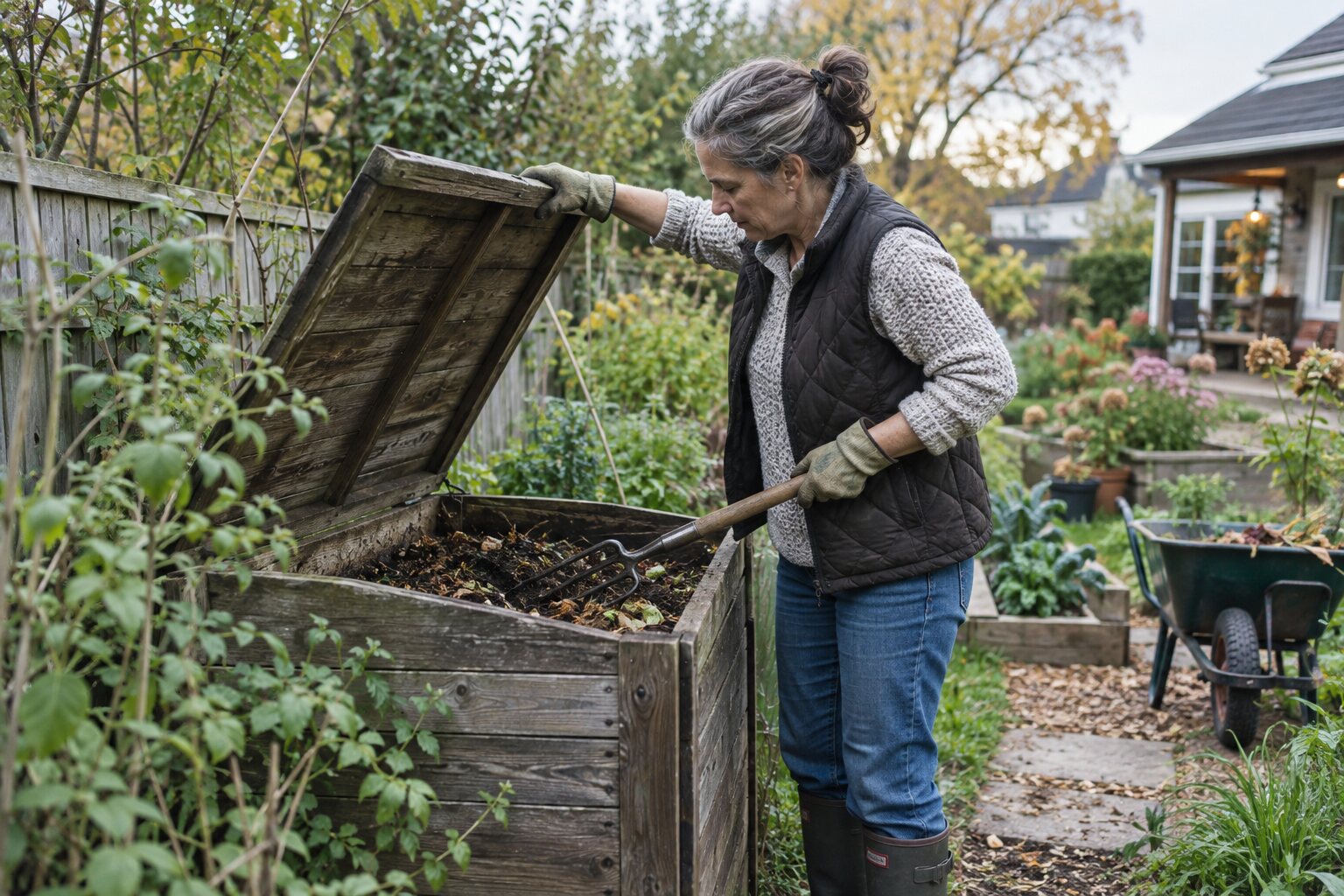
Turning compost introduces oxygen, distributes moisture, and helps the pile break down evenly. Strong odors usually mean the mix is too wet, too compacted, or dominated by nitrogen-rich scraps. Turning gently and correcting the balance works better than simply adding more water or covering the smell with a product.
Inspect before moving the pile
Look for standing liquid, slimy clumps, flies, or a sharp rotten-egg smell. A healthy pile can smell earthy and warm, but it should not make you recoil. Wear gloves and closed shoes, and avoid turning compost during very windy conditions if dry material could blow into your eyes.
Open the pile for air
Use a fork to lift material from the center and place it beside the bin or into an empty section. Break apart dense mats and mix the wetter inner material with drier leaves, shredded cardboard, or untreated paper. Lift and drop rather than grinding the pile; preserving some structure creates air spaces for microbes.
Correct moisture and ingredients
A handful of compost should feel like a wrung-out sponge: moist, not dripping. Add dry carbon material when the pile is wet, and add a small amount of water only when the material is dusty and dry. Bury fresh food scraps in the center and keep meat, dairy, oils, and pet waste out unless your system is specifically designed for them.
Monitor the recovery
Leave the pile loosely covered so rain does not saturate it while air can still move. Check it after several days and turn again only when compacted areas return. If odor persists, examine drainage and the bin’s ventilation. A balanced pile should gradually darken and shrink; persistent liquid or pests may require rebuilding the pile with a larger proportion of dry browns.