How to Check Cucumber Leaves for Aphids
Aphids can multiply quickly on tender cucumber growth, but early inspection makes control much easier. Look at new leaves, stems, and the undersides rather…

YardDecoded Library
Observation-led help for diagnosing stress, pests, disease, and growing conditions.
Aphids can multiply quickly on tender cucumber growth, but early inspection makes control much easier. Look at new leaves, stems, and the undersides rather…
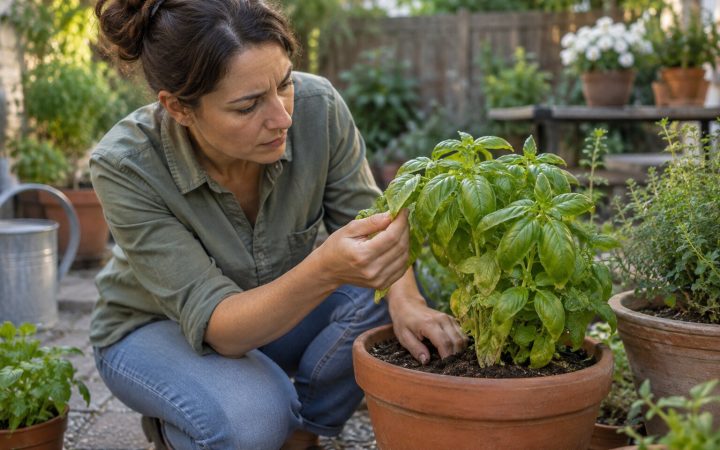
Basil that looks tired is not always thirsty. In a pot, slow-draining soil can leave roots short of oxygen, causing yellowing leaves, soft stems,…
Spider mites can cause stippled, pale tomato leaves before fine webbing becomes obvious. Inspecting early helps you distinguish mite damage from nutrient stress and…
Powdery mildew appears as pale powdery patches on cucumber leaves and can spread when foliage is crowded. Confirming the pattern before treatment helps distinguish…
Curled pepper leaves may indicate aphids, but they can also result from heat, herbicide drift, or watering stress. Inspecting the plant closely before spraying…
Yellow tomato leaves can result from age, watering stress, nutrient imbalance, disease, or insect feeding. Treating the first yellow leaf with fertilizer or spray…
Blossom-end rot appears as a small, sunken, tan or dark patch at the end of a pepper opposite the stem. It is not a…
Black spot is a common rose disease that produces dark circular lesions followed by yellowing and leaf drop. Early inspection helps limit spread, but…
Whiteflies are tiny sap-feeding insects that often rise in a cloud when a cucumber plant is disturbed. Early identification helps you use gentle controls…
Tomato hornworms can remove a surprising amount of foliage in a short time, but they are often difficult to see because their coloring blends…